Your Husqvarna sewing machine suddenly starts leaving loops under your fabric, or worse—the stitches refuse to hold together during a critical project. Before you cancel your sewing plans or schedule a costly service call, understand this: 90% of tension issues can be fixed in under 15 minutes at home. This step-by-step guide reveals exactly how to diagnose and correct both upper and bobbin tension problems on your Husqvarna machine, using only basic tools you already own. You’ll learn the precise adjustments that transform frustrating loops into perfect stitches—saving you money and keeping your projects on track.
Thread tension creates flawless stitches only when upper and lower threads interlock precisely in the fabric’s center. When this balance fails, you’ll see puckered seams, broken threads, or fabric that won’t stay together. The good news? Husqvarna machines follow predictable tension patterns. By mastering just three adjustment points—upper dial, bobbin screw, and threading path—you’ll solve most problems immediately. This guide walks you through the exact process professional technicians use, tailored specifically for Viking/Husqvarna models.
Diagnose Husqvarna Tension Issues in 60 Seconds
Identify exactly what’s wrong before grabbing your screwdriver. Loops on fabric underside? That’s classic upper tension failure. Puckered seams that break when stretched? Your tension’s too tight. Fabric layers separating during use? Bobbin tension is the likely culprit. These visual clues tell you precisely where to focus your fix—no guesswork required.
Spot Critical Tension Warning Signs
- Top thread showing on fabric bottom: Immediate sign upper tension is too loose
- Bobbin thread visible on top surface: Upper tension too tight (common after needle changes)
- Both threads bunching on one side: Threading error—not tension dial issue
- Thread snapping during zigzag stitching: Often requires bobbin tension adjustment
Standard tension settings give your starting point: Dial 4 for everyday straight stitching, 3 for buttonholes/decorative work, and 7-9 for heavy topstitching on denim or canvas. Remember—higher numbers always tighten tension on Viking/Husqvarna machines (range 1-9). Never skip testing on scrap fabric matching your project material—cotton behaves differently than silk or vinyl.
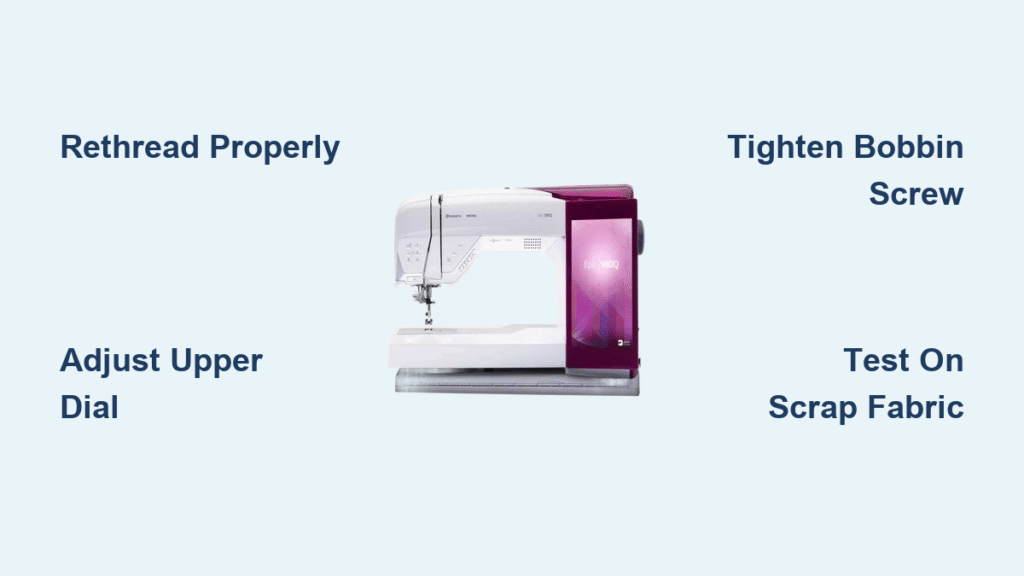
Adjust Upper Thread Tension Like a Pro

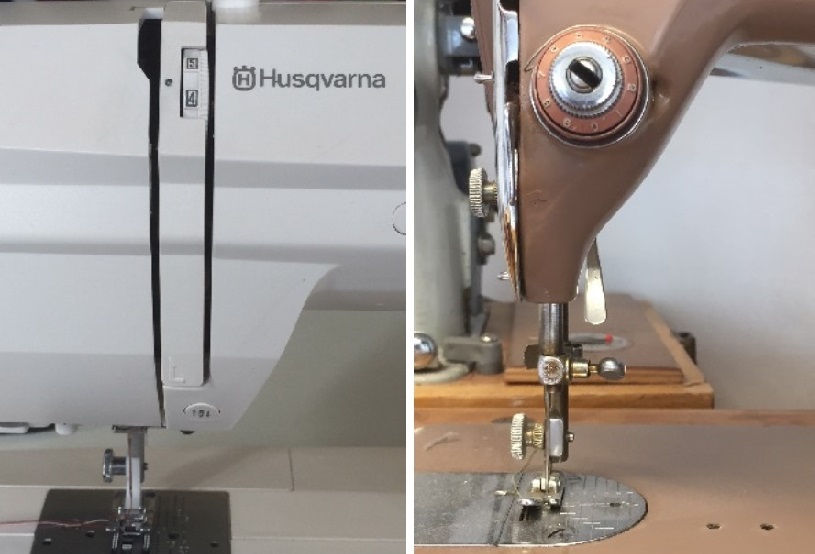
The numbered dial above your needle guide controls the tension discs gripping your upper thread. This is your first adjustment point for 80% of tension problems. Most “broken” tension issues actually stem from incorrect threading—not faulty dials. Always verify threading before twisting that dial.
Confirm Proper Threading Path First
Power down your machine and trace the thread from spool to needle. On Viking Husqvarna 400 models, thread must pass behind the metal plate visible in the tension assembly—this critical step gets missed 90% of the time. Check that thread sits firmly between the tension discs (you’ll feel resistance when pulling thread toward needle). If thread slides freely with needle down, it’s not properly seated. Rethread completely following your manual’s diagram—this solves most looping issues instantly.
Test Current Tension Correctly
Fold project-matching fabric in half and sew a 4-inch straight stitch. Examine both sides: Perfect tension shows threads interlocking invisibly in the fabric’s center. Loops underneath? Loosen upper tension. Puckering on top? Tighten it. Always test after every adjustment—never guess.
Make Micro-Adjustments That Last
Turn dial one number at a time (e.g., from 4 to 5 for tighter stitches). Sew new test line immediately after each change. Document successful settings in your machine’s manual—Husqvarna Topaz 20/50 models often need different settings for embroidery versus regular sewing. Never jump multiple numbers; Husqvarna tension responds precisely to tiny changes. If problems return after changing thread types, check compatibility issues next.
Fix Bobbin Tension Without Fear
When upper tension adjustments fail, bobbin tension is usually the hidden culprit. Loops persisting after upper dial fixes? That’s your bobbin talking. Adjusting this requires accessing the bobbin case—but don’t worry, it’s simpler than threading your machine.
Safely Access the Tension Screw
Unplug your machine first. Remove the bobbin case by pressing the latch (usually left side of machine). Flip it over to locate the small brass screw on the case exterior—this controls bobbin thread tension. Keep your machine covered to prevent dust entering the hook area during this process.
Adjust the Bobbin Screw Precisely
Insert a precision screwdriver (0.8mm works best) into the tension screw. Turn clockwise 1/8th turn to tighten (fixes loose bobbin thread showing on top). Counterclockwise 1/8th turn to loosen (solves broken threads). This is micro-adjustment territory—one full turn equals 8 dial numbers on upper tension! After each tweak, reinsert bobbin case and test on scrap fabric. Husqvarna Designer SE models often need bobbin readjustment when switching between embroidery and sewing modes.
Eliminate Looping Problems Permanently
That frustrating loop on fabric underside has three specific causes—none require replacing parts. Pre-wound bobbins cause 70% of recurring looping issues on Husqvarna machines, especially with “bobbin-specific” threads. Your solution? Control the variables.
Perform the Pull Test Diagnostic
With needle down and thread taut, gently pull the upper thread upward. If thread slides freely, either:
1) Thread isn’t seated between tension discs (most common), OR
2) Tension dial is set to “0” by accident.
Fix by rethreading completely with dial at 4, then testing pull resistance—it should feel firm but smooth.
Solve Thread Compatibility Conflicts
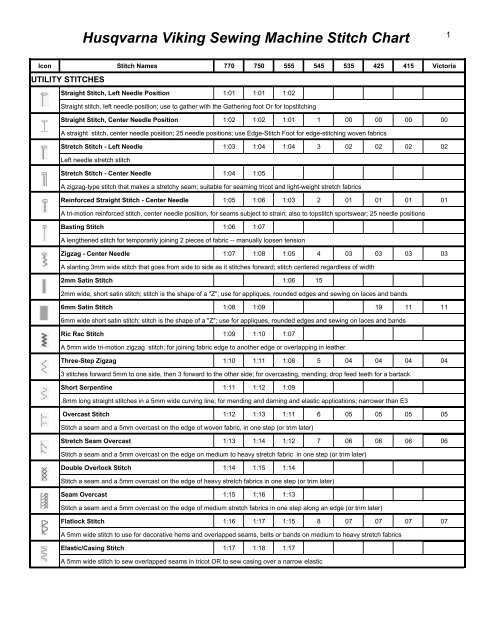
Husqvarna machines notoriously reject certain threads:
– Pre-wound bobbins often fail (use only on Brother machines)
– yLI thread causes issues in Topaz 50 series
– Mismatched thread weights (e.g., 50-weight top/60-weight bobbin)
Pro solution: Wind your own bobbins with 40-weight thread (most reliable across models). Keep separate bobbin cases preset for different weights—Topaz 20/50 users must insert bobbins counterclockwise with thread catching on the clip. Never switch thread types without retesting tension.
Prevent Husqvarna Tension Headaches Long-Term
Consistent tension starts before you press the foot pedal. Clean bobbin areas after every project—lint buildup alters tension within 20 minutes of sewing. Use only Viking-branded bobbins; generic versions warp under tension. And always test on scrap fabric matching your project—silk tension differs wildly from denim.
Your 5-Point Pre-Sewing Tension Checklist
- [ ] Verify thread passes behind metal plate in tension assembly
- [ ] Confirm needle size matches thread weight (e.g., 80/12 for 40-weight)
- [ ] Check bobbin wound evenly (no lumps or loose spots)
- [ ] Test stitch quality on project-matching scrap fabric
- [ ] Keep micro-screwdriver in your machine case for emergencies
When to Call a Professional
Seek service only if:
– Tension fails after following all steps above
– You hear grinding from tension discs
– Machine is under 5 years old with persistent issues (may indicate manufacturing defect)
Never force adjustments—if screw resists turning, stop immediately. Husqvarna’s tension discs require calibrated tools dealers have.
Master Husqvarna Tension Forever
Perfect tension isn’t magic—it’s methodical testing. Always make one change at a time and document results. That Topaz 30 model might need tension 5 for cotton but 3 for knits—keep a settings log in your machine manual. Remember: Loops mean loosen upper tension first; puckering means tighten it. When in doubt, rethread completely—90% of “broken” machines just got threaded wrong.
Your Husqvarna rewards careful attention with flawless stitches. By mastering these tension fixes, you’ve transformed from frustrated sewer to confident technician. Now grab that half-finished quilt and finish it with stitches that hold—no service call needed. For ongoing success, clean your bobbin area weekly and always test tension when changing thread types. You’ve got this!