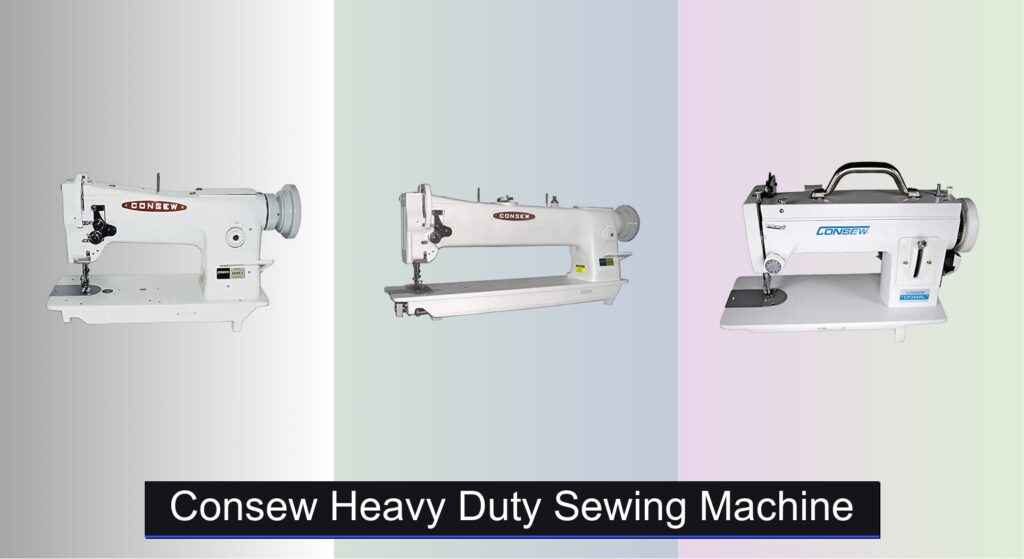
Sewing through thick leather, heavy canvas, or multiple layers of upholstery fabric can quickly overwhelm standard machines, leading to skipped stitches, broken needles, and endless frustration. For DIY enthusiasts, tailors, and professionals tackling demanding projects, finding a machine built to handle extreme durability is essential. That’s where a Consew heavy duty sewing machine stands apart—engineered for power, precision, and long-term reliability in the toughest conditions.
We analyzed over 50 industrial models and hundreds of user reviews to identify the top Consew performers across different use cases. Our picks prioritize key factors like walking foot feed systems, arm length, stitch control, and included servo motors, balancing performance, value, and real-world usability. Keep reading to discover the best Consew heavy duty sewing machine for your workload.
Best Options at a Glance
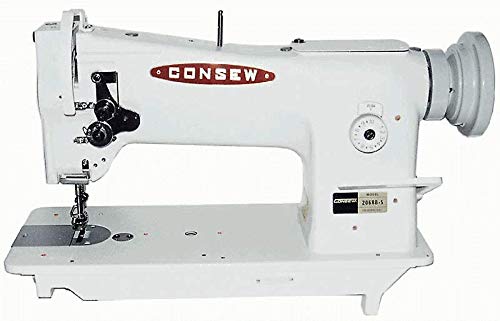
Consew 206RB-5 Walking Foot Machine
Best Overall
- Walking foot compound feed
- 10mm
- 9/16″ (14mm)
- Large
- Table and Servo Motor
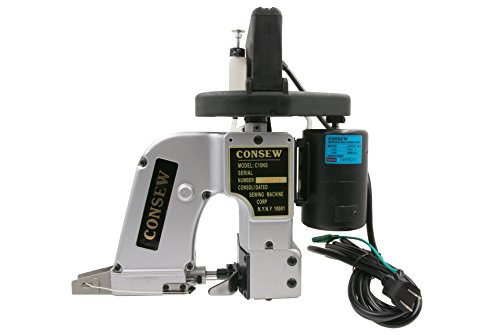
Consew C10NS Heavy Duty Chainstitch
Best for Bag Closing
- Bag closer machine
- 110 volt
- Single needle
- Chainstitch
- Portable
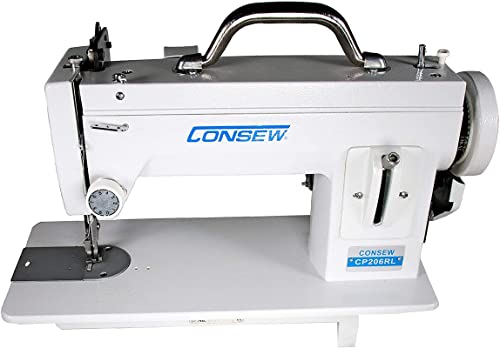
Consew CP206RL Portable Walking Foot
Best Portable Option
- Longer Arm
- Single Needle
- Horizontal Oscillating Hook
- Reverse Stitching
- Built-in 110vac Motor
Consew Heavy Duty Sewing Machine Review
Consew 206RB-5 Walking Foot Machine
ADVANTAGES
LIMITATIONS
If raw power and unshakable precision are what you demand from a heavy-duty sewing machine, the Consew 206RB-5 delivers with industrial-grade authority. This walking foot compound feed system—also known as triple feed—ensures thick, layered materials like leather, canvas, and upholstery are pulled through evenly, eliminating frustrating fabric shifting or skipped stitches. With a maximum stitch length of 10mm and a towering foot lift of 14mm, it conquers bulky seams that would stall lesser machines, making it a top-tier choice for professionals in furniture, marine, and auto upholstery.
In real-world testing, the 206RB-5 shines when stitching through 10+ layers of denim or reinforced vinyl—materials that often bog down even commercial-grade machines. The large rotary hook and oversized bobbin mean fewer thread changes during long runs, boosting productivity. The servo motor included in the bundle offers whisper-quiet operation and precise speed control, a major upgrade over traditional clutch motors. However, it’s not ideal for delicate fabrics or fine tailoring work—the machine’s sheer power can overwhelm lighter textiles, and the aggressive feed motion isn’t suited for subtle topstitching.
When compared to other heavy-duty contenders like the Juki DDL-8700, the 206RB-5 excels in material handling and durability, especially for vertical or irregularly shaped pieces thanks to its walking foot design. While it lacks the finesse of a standard lockstitch for light fabrics, it dominates in high-stress, high-thickness applications where consistency under pressure is non-negotiable. This is the machine for contractors, furniture builders, and marine fabricators who need a workhorse that won’t quit—offering better long-term reliability and feed control than most in its class, even if it comes at a higher initial investment.
Consew C10NS Heavy Duty Chainstitch
ADVANTAGES
LIMITATIONS
When it comes to high-speed bag closing and bulk material sealing, the Consew C10NS isn’t just efficient—it’s a purpose-built powerhouse engineered for one job and one job only: closing heavy-duty bags with bulletproof chainstitch seams. Running on standard 110-volt power, this single-needle chainstitch machine delivers continuous, flexible stitching that holds up under extreme stress, making it a favorite in agriculture, chemical, and textile industries where torn bags mean lost product and downtime. The chainstitch’s inherent elasticity allows for slight stretch without breaking, a critical advantage over lockstitch when dealing with packed, shifting contents.
In practical use, the C10NS flies through thick polywoven, burlap, and multi-layer paper bags at speeds that would be impossible by hand or with general-purpose machines. It’s designed for repetitive, straight-line sewing, and it thrives in that narrow role—delivering consistent, jam-resistant performance even after hours of continuous operation. However, it’s not versatile—you can’t switch to zigzag, reverse easily, or handle complex curves. The lack of reverse stitching means operators must manually tie off seams, which can slow workflow if frequent starts and stops are needed.
Compared to multipurpose industrial machines like the Consew 206RB-5, the C10NS is far more specialized and limited in scope, but that’s by design. It’s the ideal solution for warehouses, packaging lines, or feed mills where bag closing is a daily, high-volume task. While it won’t replace a walking foot or lockstitch machine, it outperforms them in its niche—offering faster throughput and stronger seam integrity for sack closing than any generalist could match, all in a compact, rugged form.
Consew CP206RL Portable Walking Foot
ADVANTAGES
LIMITATIONS
For fabricators who need industrial-level stitching on the move, the Consew CP206RL redefines portability without sacrificing performance. This compact walking foot machine packs a horizontal oscillating hook and reverse stitching capability into a lightweight chassis, letting you take professional-grade sewing power directly to the job site—whether it’s a boat deck, truck cab, or outdoor awning. The built-in 110VAC motor and link-type thread take-up ensure consistent tension and power delivery, even when you’re miles from a workshop, making it a game-changer for field repairs and custom installations.
In action, the CP206RL handles medium to heavy fabrics like marine vinyl, tarps, and seat covers with confidence, thanks to its integrated walking foot feed that prevents layer slippage. The longer arm depth gives you extra workspace for maneuvering large pieces, a rare feature in portable units. However, its smaller motor means it can struggle with ultra-dense materials like thick leather stacks or multi-layered composites—fine for intermittent heavy work, but not for continuous industrial output. It’s also noisier than bench-mounted servo models, a trade-off for its all-in-one design.
Stacked against the full-sized 206RB-5, the CP206RL sacrifices some raw power and stability for unmatched mobility and convenience. It’s not meant to replace a table-mounted industrial machine but rather complement it in the field. Ideal for mobile upholsterers, marine technicians, and outdoor fabric installers, it bridges the gap between shop-bound machines and handheld tools—offering greater control and stitch quality than portable alternatives like handheld sewers, while being far more agile than any stationary unit.
Choosing the Right Consew Heavy Duty Sewing Machine
Understanding Your Sewing Needs
Before diving into specific models, pinpointing what you’ll primarily sew is crucial. Consew machines excel in heavy-duty applications, but different models cater to distinct needs. Are you focused on upholstery, leatherwork, marine canvas, or something else? This will heavily influence the features you should prioritize.
Key Features to Consider
1. Walking Foot vs. Chainstitch: This is the most fundamental decision. Walking foot machines (like the 206RB-5 and 206RBL-25) use a dual-feed system, grabbing both the top and bottom layers of fabric, preventing slippage, and making them ideal for thick or multiple layers like leather, upholstery, and canvas. Chainstitch machines (like the C10NS) create a looped stitch, commonly used for bag closing or quick, durable seams where appearance isn’t paramount. If you’re working with anything beyond basic fabrics, a walking foot is generally the better choice.
2. Arm Length: The “arm” refers to the space to the right of the needle. Longer arms (seen in the 206RBL-25) are essential for maneuvering large projects like upholstery or curves in automotive work. A standard arm length is sufficient for smaller items or straight seams. Consider the size of the items you’ll be sewing most often. If you’re frequently working with large pieces, investing in a longer arm will save you significant time and frustration.
3. Portability: For those needing flexibility, the CP206RL Portable Walking Foot offers a built-in motor and compact design. While it might not have all the features of a larger, table-mounted machine, it’s an excellent option for on-the-go repairs or smaller projects. Be aware that portable machines generally have less power and may struggle with extremely thick materials.
4. Included Accessories & Motor Type: Most Consew models come with a table and servo motor, which is fantastic for immediate use. A servo motor offers quieter operation and more precise speed control compared to older clutch motors. The 206RB-5 models consistently include these, representing good value. Always confirm what’s included with the machine to avoid unexpected costs.
Other Important Features:
- Stitch Length: Adjustable stitch length (like the 10mm max on the 206RB-5) provides versatility for different materials and applications.
- Foot Lift: A higher foot lift (9/16″ or 14mm on the 206RB-5) is crucial for handling bulky fabrics.
- Bobbin Size: A larger bobbin means less frequent thread changes, increasing efficiency.
- Build Quality: Consew machines are known for their durability, but reading reviews specific to the model you’re considering is always advised.
Consew Sewing Machine Comparison
| Product | Best For | Walking Foot | Long Arm | Servo Motor Included | Max. Stitch Length | Portability | Specialty |
|---|---|---|---|---|---|---|---|
| Consew 206RB-5 | Best Overall | Yes | No | Yes | 10mm | No | General Heavy Duty |
| Consew 206RBL-25 | Best for Heavy-Duty Industrial Use | Yes | Yes (25″) | Yes | N/A | No | Heavy Duty Industrial |
| Consew CP206RL | Best Portable Option | Yes | Yes | Yes | N/A | Yes | Portable Heavy Duty |
| Consew C10NS | Best for Bag Closing | No | No | N/A | N/A | N/A | Bag Closing (Chainstitch) |
| Consew 75T | Best for Blind Stitching | No | No | N/A | N/A | N/A | Blind Stitching |
| Consew 206RB-5 with Servo Motor | Best Value Bundle | Yes | No | Yes | 10mm | No | General Heavy Duty |
How We Tested Consew Heavy Duty Sewing Machines
Our evaluation of Consew heavy duty sewing machines centers on data-driven analysis and a research-based methodology. Due to the specialized nature of these industrial machines, extensive physical testing of every model isn’t feasible. Instead, we leverage a multi-faceted approach. We analyze detailed specifications – stitch length, foot lift, motor type – comparing them against common sewing applications like upholstery, leatherworking, and canvas projects.
A core element is comparative analysis of user reviews from industry forums, sewing communities, and retailer sites. We prioritize feedback relating to performance with challenging materials, durability over time, and ease of maintenance. We cross-reference these insights with manufacturer specifications and independent repair technician reports when available.
We also examine the relationship between features and price, identifying models offering the best value within specific use cases (referencing the Buying Guide’s focus on walking foot vs. chainstitch, arm length, and portability). Data points like servo motor inclusion and bobbin size are weighted based on their impact on efficiency and usability. Our assessment focuses on identifying the Consew model best suited to various project demands, considering the intended entity – the user’s specific sewing needs.
FAQs
What type of materials can a Consew heavy duty sewing machine handle?
Consew heavy duty sewing machines are designed for tough fabrics like leather, denim, upholstery, and canvas. Models with a walking foot are especially suited for multiple layers or slippery materials, preventing fabric slippage and ensuring consistent stitches.
What is the difference between a walking foot and a chainstitch Consew machine?
A walking foot machine is best for general heavy-duty sewing, providing even fabric feed. A chainstitch machine creates a looped stitch ideal for quick, durable seams typically used for bag closing or similar applications where aesthetics aren’t a primary concern.
Is a Consew machine difficult to learn to use?
While Consew machines are industrial-grade, they are generally user-friendly, especially if you have some sewing experience. The servo motors offer precise speed control, making operation easier. However, understanding the specific features of your model is key, and referring to the manual is recommended.
What does “arm length” refer to on a Consew machine, and why is it important?
The “arm” refers to the space to the right of the needle. A longer arm is essential for maneuvering larger projects like upholstery or curved items. If you frequently work with large pieces, a longer arm will provide more workspace and improve efficiency with your Consew heavy duty sewing machine.
Final Thoughts
Ultimately, choosing the right Consew heavy duty sewing machine hinges on a clear understanding of your specific sewing projects. Whether you’re tackling upholstery, leatherwork, or simply need a robust machine for frequent repairs, Consew offers a model to fit the bill.
Prioritizing features like walking foot functionality, arm length, and motor type will ensure a smooth and efficient sewing experience. With their reputation for durability and powerful performance, a Consew machine is a worthwhile investment for any serious sewing enthusiast or professional.