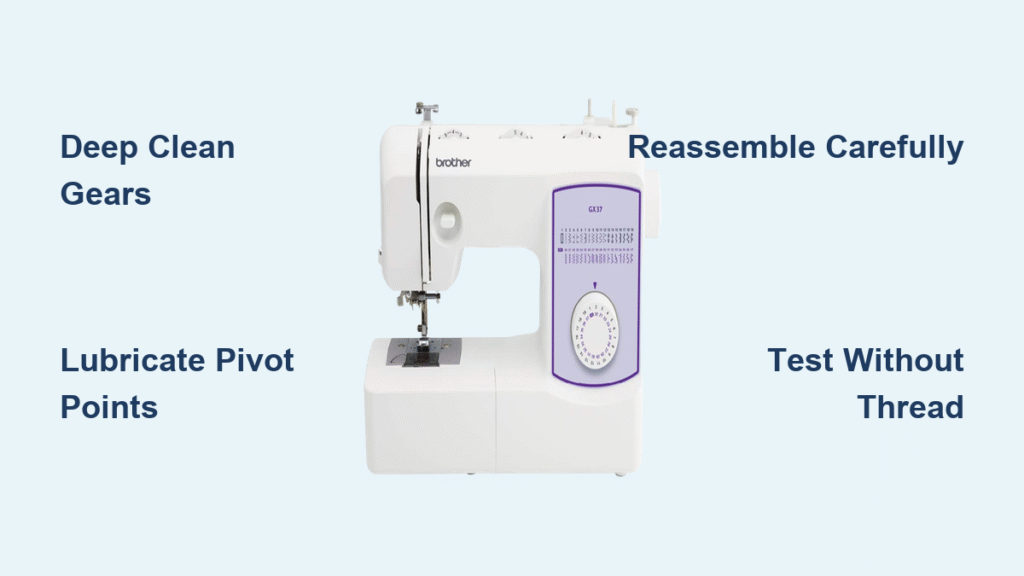
Your Brother sewing machine suddenly starts skipping stitches on delicate silk, or fabric tucks under the needle during a critical project. The tension wobbles between loose and tight without explanation. These aren’t random glitches—they’re urgent signals your machine needs a professional-level brother sewing machine tune up. While repair shops charge $65+ per visit, you can restore flawless stitching with basic tools and this step-by-step guide. Crucially: these techniques work best for Brother models from the late 1990s and earlier. Newer machines often require professional servicing, but your vintage workhorse responds brilliantly to DIY care. Monthly maintenance prevents 90% of common failures and doubles your machine’s lifespan.
Essential Tools for Your Brother Sewing Machine Tune-Up
The Must-Have Tune-Up Toolkit
Gather these items before opening your machine:
– Precision screwdrivers (small sizes from eyeglass kits or sewing stores)
– Standard screwdriver for larger housing panels
– Knitting needle wrapped in microfiber cloth for grease removal in tight spots
– Singer tube grease (liquid oils damage vintage mechanisms—avoid them)
– Tweezers and soft brushes (old makeup or toothbrushes work perfectly)
– Heavy-duty rag that won’t shed fibers near gears
Screw Organization System That Prevents Disaster
Before removing a single screw, sketch a diagram labeling:
– Screw sizes and locations (e.g., “3mm top panel screw”)
– Washer orientations (flat vs. spring washers)
– Bracket configurations (hinged vs. screwed panels)
Pro Tip: Place screws on a labeled magnetic mat or egg carton. Losing one tiny screw can halt reassembly.
Prepare Your Brother Machine for Service
Remove All Consumables First
Pull out thread spools, the bobbin case, and needle immediately. This prevents thread snarls during cleaning and gives full access to lint traps. Never skip this—thread fragments cause 40% of “mystery” tension issues.
Locate Model-Specific Manual Guidance
Check your manual’s “Maintenance” section for disassembly quirks. No manual? Search “[Your Model] sewing machine manual PDF” online. Vintage copies on eBay cost under $10 but prevent costly mistakes. Critical: Front-loading bobbin models (like Brother LX3125) require different handling than top-loaders.
Top Mechanism Deep Clean Without Breaking Springs

Rotate Components for Complete Lint Removal
Turn the hand wheel toward you while watching gears move. This reveals hidden lint pockets:
1. Clean one visible section with a brush
2. Rotate hand wheel 1/4 turn
3. Turn stitch-width knob through full range
4. Repeat until all areas are exposed
Spring Safety Protocol
Identify every spring before cleaning—they’re failure points. Use only:
– Soft brushes (never metal tools)
– Gentle wiping motions with cloth-wrapped knitting needle
– Never pull or stretch springs. If one dislodges, stop immediately—forcing repositioning causes breakage.
Left Side and Bobbin Area Cleaning: Front-Loading Models Only
Needle Plate and Feed Dog Deep Clean
Remove the presser foot and needle. Then:
1. Unscrew or slide forward the needle plate (varies by model)
2. Brush between feed dog teeth with stiff-bristled brush
3. Clean thread guides with dry cloth—lint here causes skipped stitches
Bobbin Housing Disassembly Steps
Skip if you have a top-loading model (like Brother CS6000i)
1. Locate two small arms on bobbin mechanism sides
2. Gently push arms outward to release race (first metal piece)
3. Remove hook (second metal piece)
4. Brush lint from race, hook, and housing corners—this area traps 70% of debris
Precision Oiling Points Every Brother Owner Must Know
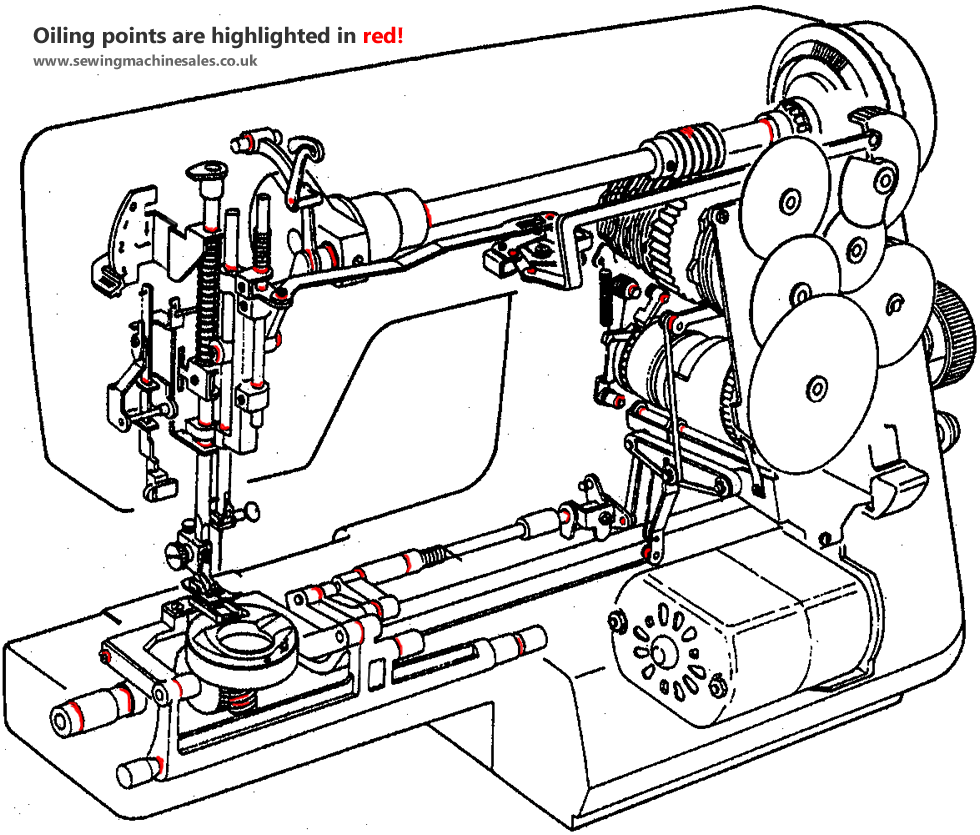
Where to Apply Grease (and Where to Avoid)
Apply Singer tube grease ONLY where metal parts touch:
– Top mechanism: Gear contact points, cam followers, lever pivots
– Left side: Needle bar shaft, oscillating bobbin pivots
– Underside: All visible pivot points
Critical exclusions:
– Never oil belts (causes slippage)
– Avoid plastic components (grease degrades them)
– Skip thread paths (grease attracts lint)
Exact Lubrication Quantities
- Tube grease: Half-pea sized dab per contact point (excess attracts lint)
- Liquid oil: 1 drop max per point (use only if manual specifies)
Pro Tip: Run machine for 2 minutes after oiling to distribute grease before reassembly.
Reassemble Your Brother Machine Correctly in 5 Steps
Bobbin Housing Reinstallation Checklist
1. Turn hand wheel until inner crescent piece sits right-positioned
2. Insert hook ONLY when crescent is aligned (listen for click)
3. Place race over hook using bottom notch as guide
4. Snap black arms over metal buttons firmly
5. Verify feed dogs are upright (red arrows visible)
Final Assembly Safety Check
Replace screws in reverse removal order. Before testing:
– Wipe case grooves with dry cloth (dust causes overheating)
– Confirm all springs are seated (hold machine sideways to check)
– Never force misaligned parts—recheck positioning if resistance occurs
Post-Tune-Up Testing: Run Without Thread First
The 10-Minute Oil Break-In Process
Install a new needle and run machine without thread at full speed for 5-10 minutes. This distributes grease evenly through mechanisms. Stop immediately if you hear grinding—recheck for trapped lint.
Scrap Fabric Test Sewing Protocol
Use cheap muslin for initial sewing:
1. Expect oil transfer to fabric for first 50 stitches
2. Continue sewing until:
– No oil stains appear
– Thread runs clean (no grease residue)
– Machine sews smoothly at high speed
Warning: Stop if tension issues persist—re-clean bobbin area before retesting.
Brother Sewing Machine Maintenance Schedule by Usage
Heavy-Use Machines Need Monthly Tune-Ups
If you sew 5+ hours weekly:
– Perform full clean/lube monthly
– Replace needle after every 8 hours of use
– Wipe thread paths daily with dry cloth
Why Annual Professional Service is Non-Negotiable
Even with perfect DIY care:
– Schedule pro servicing yearly for gear alignment checks
– Professionals diagnose internal belt wear (invisible to users)
– Critical: Newer digital Brother models (2010+) require shop calibration—don’t attempt DIY.
Safety First: Critical Tips for DIY Brother Tune-Ups
Never Force Components: Gentle Handling Techniques
If a part resists movement:
– Recheck for hidden screws or springs
– Never use pliers on small parts (use tweezers)
– Stop immediately if something feels “wrong”—photograph the area and consult forums
Workspace Organization to Prevent Lost Parts
Lay a white sheet under your machine to spot dropped screws. Keep a flashlight handy to illuminate shadowed areas. Most critical: Handle springs with tweezers—they’re the #1 cause of post-tune-up failures when misplaced.
Your Brother sewing machine now operates like new, eliminating skipped stitches and tension nightmares. By performing this brother sewing machine tune up monthly, you’ll avoid 95% of repair shop visits while extending your machine’s life for decades. Remember: vintage Brother models thrive on consistent care, but never force unfamiliar steps—when in doubt, consult a professional. Keep this guide near your sewing station; your next project depends on it.