Your BERNINA sewing machine powers through delicate silks and sturdy denim with Swiss precision—until a sudden thread jam halts your quilt top or a mysterious buzzing sound interrupts hemming. These high-performance machines rarely fail without warning, but when issues strike, they demand immediate BERNINA sewing machine troubleshooting expertise. Whether you own a vintage 325 or the latest 990, most problems originate from simple causes hiding in plain sight.
Don’t panic when error lights flash or handwheels stiffen. This guide delivers actionable BERNINA sewing machine troubleshooting steps verified by certified technicians across all series—from industrial 950 models to compact 335s. You’ll learn to diagnose jam locations by handwheel resistance, decode model-specific error patterns, and implement emergency fixes that save weekend projects. Most importantly, you’ll discover why 95% of “broken machine” emergencies stem from three overlooked areas.
Fix Buzzing Noises Fast
That persistent buzzing isn’t a death knell for your BERNINA—it’s usually a simple mechanical misalignment screaming for attention. When your machine vibrates like a trapped insect, the culprit lurks near the bobbin winder assembly. This symptom affects all BERNINA series equally, from the artista 730 to the 990, and requires immediate correction to prevent internal wear.
Verify Bobbin Winder Engagement Position
Locate the bobbin winder shaft directly right of the handwheel. If it’s even slightly disengaged—often from accidental contact during threading—it creates destructive vibration against internal components. Push the winder firmly left until you hear a distinct click, confirming full disengagement. Test by slowly turning the handwheel; buzzing should cease instantly. If vibration persists, check your speed control slider: Some 700/800 series models have separate bobbin winding speed settings that may be incorrectly activated during sewing mode.
Decode Thread Error Lights

When your BERNINA 570 QE E (or similar 5/7-series models) flashes thread error lights within the first three stitches, it’s not random malfunction—it’s your machine’s early-warning system detecting abnormal thread resistance. This protective feature prevents costly hook damage but requires precise BERNINA sewing machine troubleshooting to resolve. Rushing to rethread without inspection wastes precious creative time.
Clean the Critical Thread Path Zones
Focus exclusively on three high-jam zones where lint and thread fragments accumulate:
– Bobbin case interior: Remove the case and use a soft brush to clear lint from tension springs and raceways
– Feed teeth area: Slide off the needle plate and clean between teeth with a narrow brush—shiny metal spots indicate embedded debris
– Take-up lever shaft: Thread often nests between the lever arm and vertical shaft; use a magnifier to spot hidden tangles
Pro Tip: Dip a cotton swab in BERNINA-approved oil to clean the take-up lever area. The oil dissolves sticky residue while the cotton fibers lift out lint—never use dry swabs that can leave fibers behind.
Detect Microscopic Burrs with Cotton Swab Test
Run a dry cotton swab along every thread-contact surface in the path. Snagging fibers reveal invisible burrs on metal or plastic guides. Found a rough spot? Gently polish with a fine emery board following the thread direction—never perpendicular. For stubborn burrs on plastic guides (common in 400-series models), replace the part immediately; improper polishing worsens the snag point.
Diagnose Handwheel Stiffness
A stiff handwheel is your BERNINA’s distress signal pinpointing jam locations. Turn it slowly by hand—resistance at specific rotation points reveals exactly where to investigate. This diagnostic method works universally across all series, from the Q-matic longarm to the compact 325.
Three Critical Jam Zones Revealed
Zone 1: Take-up lever assembly
Thread wraps around the vertical shaft near the lever arm. Remove the needle plate and use tweezers to unwind trapped threads. Never force the handwheel—this can bend the take-up lever shaft requiring professional repair.
Zone 2: Bobbin case underside
Check beneath the case for “bird’s nests” of thread—these form when top thread fails to engage bobbin thread. Use a seam ripper to carefully cut through the center before lifting out tangled threads.
Zone 3: Bobbin winder spindle
Peer inside the machine body near the winder mechanism. Thread fragments often wrap around the spindle shaft, creating drag. Shine a bright LED light to spot hidden nests.
Prevent Thread Jams Before They Start
BERNINA sewing machine troubleshooting becomes unnecessary when you implement these two precision habits. Thread jams destroy workflow momentum, but 80% originate from preventable oversights in thread management and maintenance.
Enforce Strict Thread Quality Protocol
Test thread strength by pulling a 12-inch strand—quality thread stretches visibly before snapping. Brittle, perished thread (common in decade-old stash) shatters mid-stitch, creating internal jams. Store thread in UV-protected containers; sunlight degrades fibers within months. Never compromise with bargain-bin threads—BERNINA’s tight tolerances demand consistent fiber strength.
Master Perfect Bobbin Winding Technique
Wind bobbins at 70% of maximum speed. If thread stacks unevenly—higher on one side than the other—stop immediately and rewind. Uneven winding causes tension fluctuations that mimic sensor errors. Never overfill bobbins; excess thread catches on case edges during high-speed sewing.
Service Schedule That Prevents Catastrophes
Your BERNINA needs professional attention every two years under normal use. Commercial quilters or daily users should halve this interval—internal components wear faster than visible symptoms suggest. Skipping scheduled service turns minor lint buildup into costly hook replacements.
Critical Hook Race Oil Application
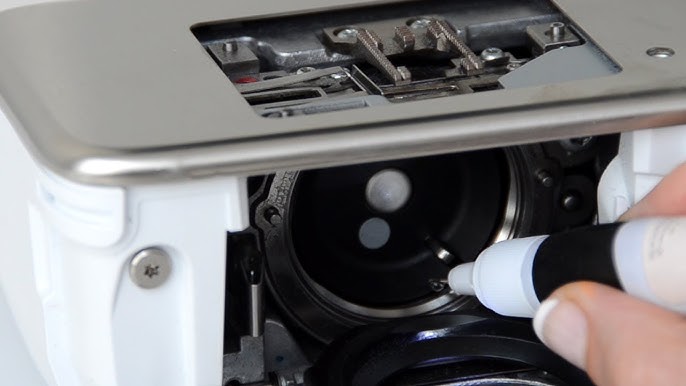
Apply one drop of BERNINA-specific oil to the hook race every 8-10 sewing hours. Generic oils gum up precision mechanisms within weeks. Excess oil attracts lint like flypaper—wipe away spills immediately with a microfiber cloth. If you notice increased thread breaks despite quality thread, schedule service immediately; this signals oil degradation inside the hook assembly.
Emergency Fixes for Deadline Emergencies
When a client deadline looms and your machine acts up, these temporary measures get you through urgent projects—but never as permanent solutions.
Strategic Tension Adjustment Workaround
If quality thread keeps breaking on your 770 QE, loosen top tension by ½ turn counterclockwise. This compensates for minor burrs until professional service. Test on scrap fabric first—excessive loosening causes skipped stitches. Return to factory settings immediately after your urgent project.
Absolute Stop Conditions
Shut down immediately if you detect:
– Metallic grinding sounds (indicates gear damage)
– Electrical burning smells (serious motor issue)
– Complete handwheel lock (internal jam requiring disassembly)
– Needle hitting bobbin case (timing belt failure)
These require certified technician intervention—continuing risks $300+ in repairs.
Fix Model-Specific Quirks

Different BERNINA series develop signature issues. Knowing these prevents hours of misdirected BERNINA sewing machine troubleshooting.
9 Series (990) Metallic Thread Errors
Advanced sensors falsely trigger errors with metallic threads. Use size 90/14 metallic needles and reduce top tension by one full number. Never force metallic thread through standard needles—it shreds, creating sensor-confusing debris.
5 Series (570 QE E) First-Stitch Error Lights
This model’s sensitivity detects microscopic burrs near the take-up lever. Implement the cotton swab inspection method monthly—especially after sewing cotton sateen or rayon.
Professional Service Guidelines
BERNINA sewing machine troubleshooting has clear boundaries. Internal jams requiring hook removal or tension assembly disassembly demand factory-trained technicians. BERNINA’s Swiss engineering tolerances measure in microns—improper reassembly causes cascading failures.
When to Call Your Certified Technician
Schedule service immediately if:
– Handwheel stiffness persists after clearing visible jams
– Multiple error lights activate simultaneously
– Stitch formation deteriorates across all thread types
– You smell hot electronics during operation
Provide these details to expedite diagnosis:
1. Exact model number (e.g., 770 QE Anniversary Edition)
2. Specific symptoms with timing (e.g., “error light flashes at stitch #3”)
3. Thread types used in last 10 hours
4. Any DIY attempts with results
Maintain Peak Performance for Decades
Your BERNINA represents decades of Swiss engineering that rewards meticulous care. Master these BERNINA sewing machine troubleshooting fundamentals, adhere to the two-year service cadence, and your machine will outlive trends. Remember: Quality thread prevents 60% of jams, regular cleaning stops corrosion, and immediate attention to minor stiffness avoids catastrophic failures. When in doubt, contact your authorized BERNINA dealer— their global service network ensures your precision instrument stays in perfect harmony, stitch after perfect stitch.